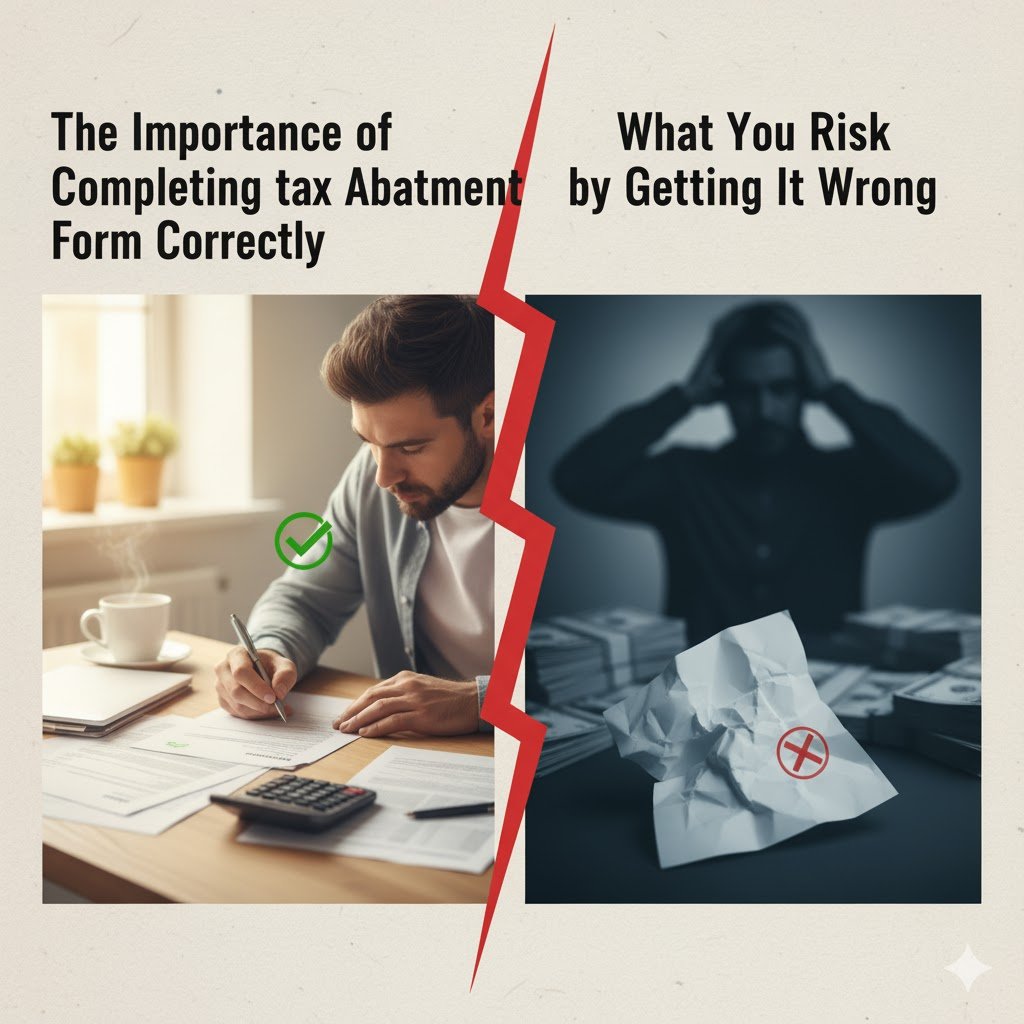
Filing the Washoe County Tax Abatement Form: Avoid Costly Mistakes
Jena Lanini November 6, 2025
Jena Lanini November 6, 2025
When you own property in Washoe County (or many other jurisdictions), you may qualify for a tax cap or abatement that limits how much your property taxes can increase in a given year. But to secure that benefit, you must fill out the required claim form accurately and submit it on time. If you fail to do so, you could lose access to the lower tax-increase rate and end up paying a higher rate intended for investors or non-owner-occupied properties.
Below is why this form matters, what errors to avoid, and tips to protect yourself.
In Nevada, NRS 361.471–361.4735 provides for a partial tax abatement (also known as “tax cap”) on property taxes.
The tax cap limits how much your property taxes can rise from one year to the next. Washoe County
For qualifying properties (owner-occupied primary residences or rentals charged at or below fair market rent), the low tax cap is capped at 3% increases. Washoe County
For all other properties, a high tax cap (up to 8%) applies. Washoe County
Thus, the difference between the low cap and high cap can be material over time.
So, the tax cap benefit is real but only if the county assessor knows you qualify.
The Washoe County claim form asks for:
Owner name, parcel (APN), property address.
A checkbox to indicate whether the property is your primary residence as of July 1 of the tax year.
If the property is used as a rental, the form demands detailed rental info: number of bedrooms per unit, the highest monthly rent charged (during April 1 of the prior year through March 31), whether utilities are included, etc.
A checkbox if the property is used as transient lodging (short-term rental) — which disqualifies for the low tax cap.
A signature, date, and affirmation under penalty of law that the provided information is true.
Because the assessor’s office uses the information you provide to decide whether your property qualifies for the lower (3%) cap or is forced into the higher (8%) cap, any misstatement or omission can cost you.
Automatic assignment to the higher tax cap
If you don’t file the form, or you fail to provide required details (especially for rentals), your property may default into the high tax cap category (8%).
That means your taxes could legally increase more — costing you hundreds or thousands more each year.
Loss of long-term savings
Over multiple years, paying a higher rate compounds. The extra you pay because of an avoidable error could far outweigh the cost of careful filing.
Difficulty correcting after the fact
While the form FAQ states you may submit late claims (by June 30) or petition for review, those processes may be more cumbersome, risk denial, or require evidence/documentation.
Potential legal ramifications for false statements
The form includes certification “under penalties provided by law” that your statements are accurate. Deliberate misrepresentation could trigger denial, penalties, or even legal consequences.
Missed opportunity for a primary residence benefit
If you qualify for the low tax cap as an owner-occupied home, but you mistakenly mark “rental” or fail to check primary residence, you lose access to the 3% cap. That’s preventable if the form is accurate.
Leaving rental details blank (bedrooms, rent amounts, utilities). The form specifically warns that if you don’t provide that, the high tax cap may apply.
Aggregating data incorrectly — e.g. combining multiple units’ rents into one total, rather than listing each unit separately.
Forgetting to check the “primary residence” box when eligible.
Claiming a residence in another county or state as your primary residence simultaneously — which violates the form’s rules.
Missing the deadline or assuming “no change” means you don’t need to file. The form and county may still require you to submit annually.
Not signing or dating the form.
Read all instructions and FAQs on the county’s assessor website; they often include clarifications.
Gather accurate data ahead of time, especially rental data: for each unit, determine the highest monthly rent charged in the defined period and whether utilities were included.
Double-check checkboxes (primary residence vs rental vs transient lodging).
Use an extra sheet if you have more units than the form space allows; the form suggests attaching additional sheets.
Submit on time. Even late claims may be accepted (by June 30), but timely is safer.
Keep a copy of your signed form and all supporting calculations.
If denied or disqualified, file a petition for review (by June 30 of the fiscal year) with the county assessor.
Filing the Washoe County tax-cap claim form correctly is not a mere formality — it’s your gateway to securing a lower, legally allowed cap on how much your property taxes can rise. A careless mistake, omission, or missed deadline can cost you dearly by placing your property into the higher tax-increase category. But with care, diligence, and accurate data, you can protect your tax benefit.
If you like, I can help you turn this into a polished blog with formatting, a checklist, or sample fillings. Do you want me to do that for you?
Stay up to date on the latest real estate trends.







Jena Lanini crafts refined real estate experiences with strategy, heart, and unmatched local insight. From Reno to Lake Tahoe, trust her to navigate your next move with clarity and confidence.